
The Tactile Graphic studio
Making culture accessible without compromising its depth:
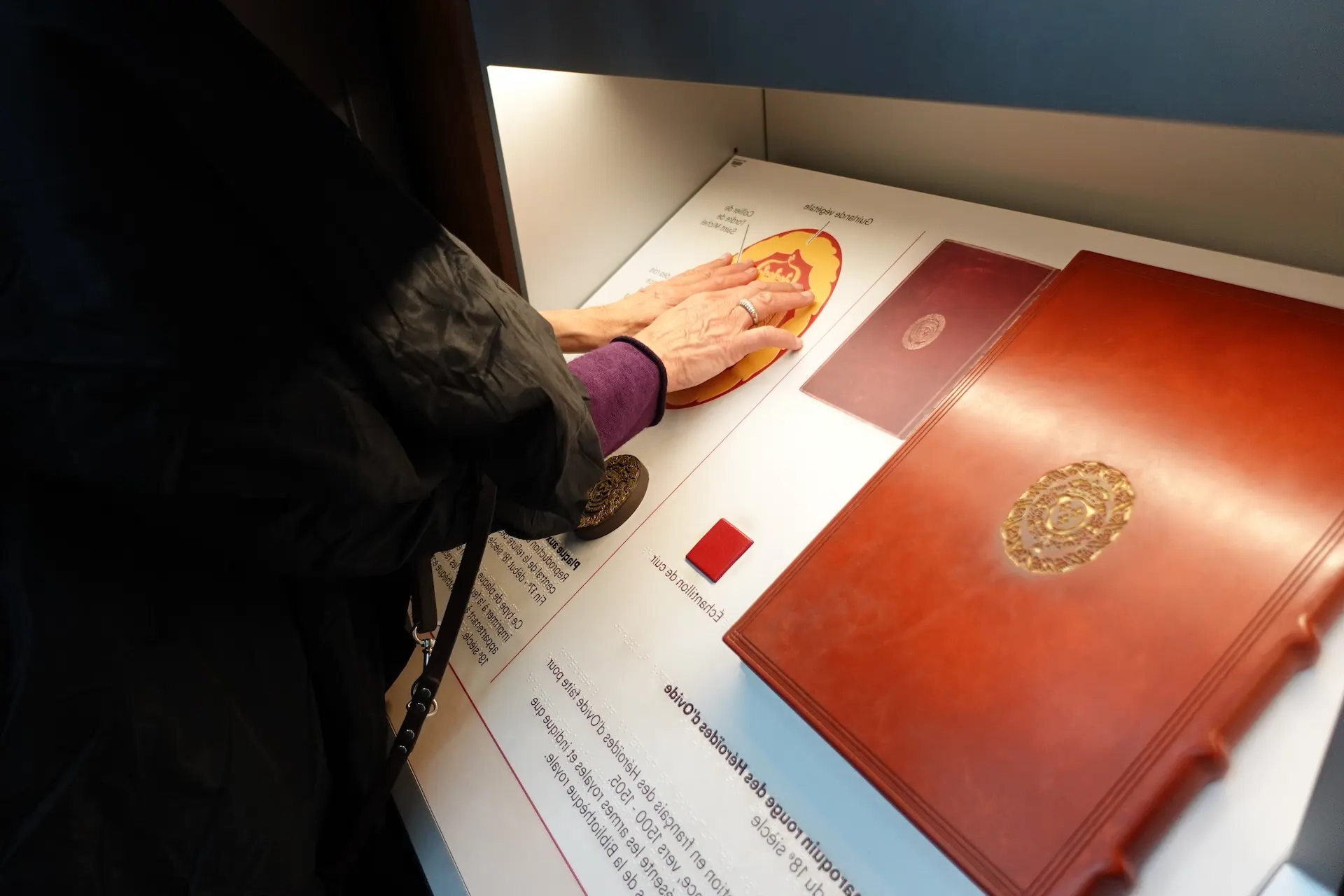
We design and print braille documents, dual-script books, tactile images and maps, as well as mediation tools for museums, associations, institutions, and other public venues.
Our tactile expertise
A tactile image is more than just an image in relief
Because they must convey a work without relying on sight, our creations require an explicit graphic structure and deep reflection on how to present, explain, and share cultural knowledge. It is through this conceptual and graphic rigor, initially designed for the visually impaired, that our tactile tools ultimately benefit all audiences.
BRAILLE PUBLISHING
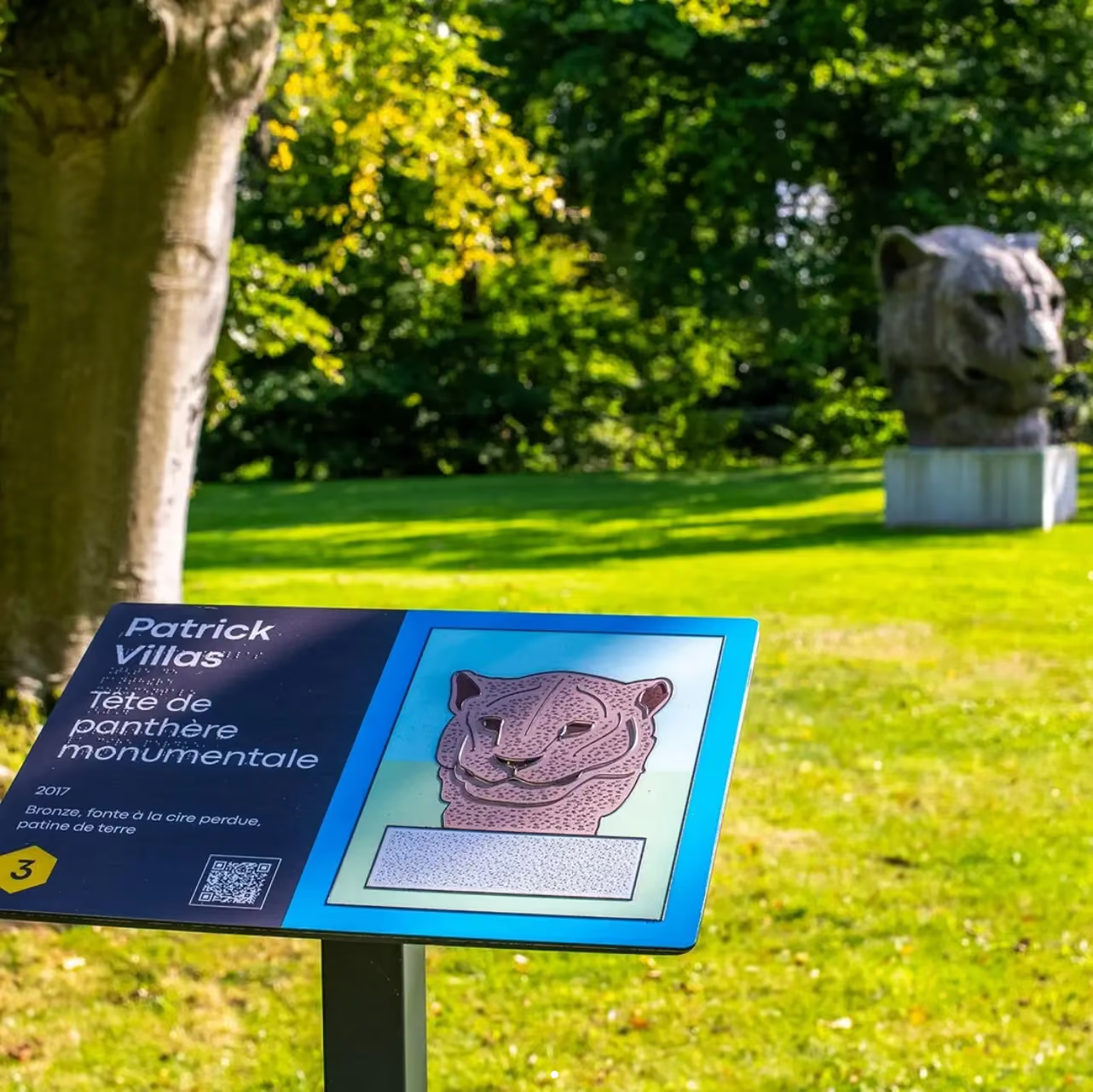
Braille publishing and printing are among the historical pillars of Laville Braille & Tactile
To us, braille remains an irreplaceable tool for direct access to the written word. Designing a braille document is not just about transcribing existing content, but about considering its usage, how it is read, and how it is shared. This reflection guides our approach to braille, dual-script, and everyday practical documents.

OUR CONVICTIONS
We are convinced that braille and tactile graphics open up new ways to discover, understand, and share works of art, images, and knowledge. When integrated from the design stage, they become drivers for graphic creation, innovation in cultural mediation, and the transmission of knowledge.
Cultural and aesthetic excellence
Cultural and aesthetic excellence is at the heart of our approach. For us, making a work of art, a space, or knowledge more accessible through touch does not mean reducing its richness, complexity, or ambition. Whether it is a braille document or a tactile device, our goal is to bring out the uniqueness of the content while opening new paths for discovery.
We firmly believe that accessibility, intellectual rigor, and aesthetic quality can reinforce one another. Tactile design does more than just open content to new audiences: it reveals new possibilities for mediation, turns diverse perceptions into a resource for everyone, and enriches design itself.
Creativity fueled by production
Our creativity stems as much from design as it does from production. Because we bring these two dimensions together in the same studio, technical constraints become levers for invention rather than limitations. Theory is immediately confronted with material. A mix of media, printing processes, visual contrasts, reliefs, textures, finishes, and assemblies directly informs how we conceive our projects.
This proximity between design and production allows us to constantly explore and test new solutions, making accessibility a driver for creation, graphic research, and the renewal of mediation practices.
Designing every bespoke project
We favor a bespoke approach over the application of predefined methods or solutions. Each project has its own context, usage, constraints, and mediation goals. We therefore seek to build the most relevant graphic and tactile language for each one.
This standard guides the design of a braille document just as much as a tactile image or a mediation tool. Design choices always stem from the content itself, what you wish to convey, and the audiences it is intended for.
We do not believe in the existence of a universal tactile language. Every work, every space, and every project calls for a specific interpretation, thought out in close alignment with its uniqueness.
Building projects collectively
Our studio brings together complementary skills: creatives, technicians, and cultural professionals. This diversity of perspectives enriches every project from its inception.
It extends through a close dialogue with our clients' teams and their expertise in accessibility, mediation, and design—whether museums, institutions, associations, or companies—as well as with specialized educators and the audiences involved.
We are convinced that the most relevant and innovative projects are born from this collective intelligence, where professional expertise, deep knowledge of cultural content, and experience with audiences reinforce one another.
OUR HISTORY
1966
Printing as a culture of touch
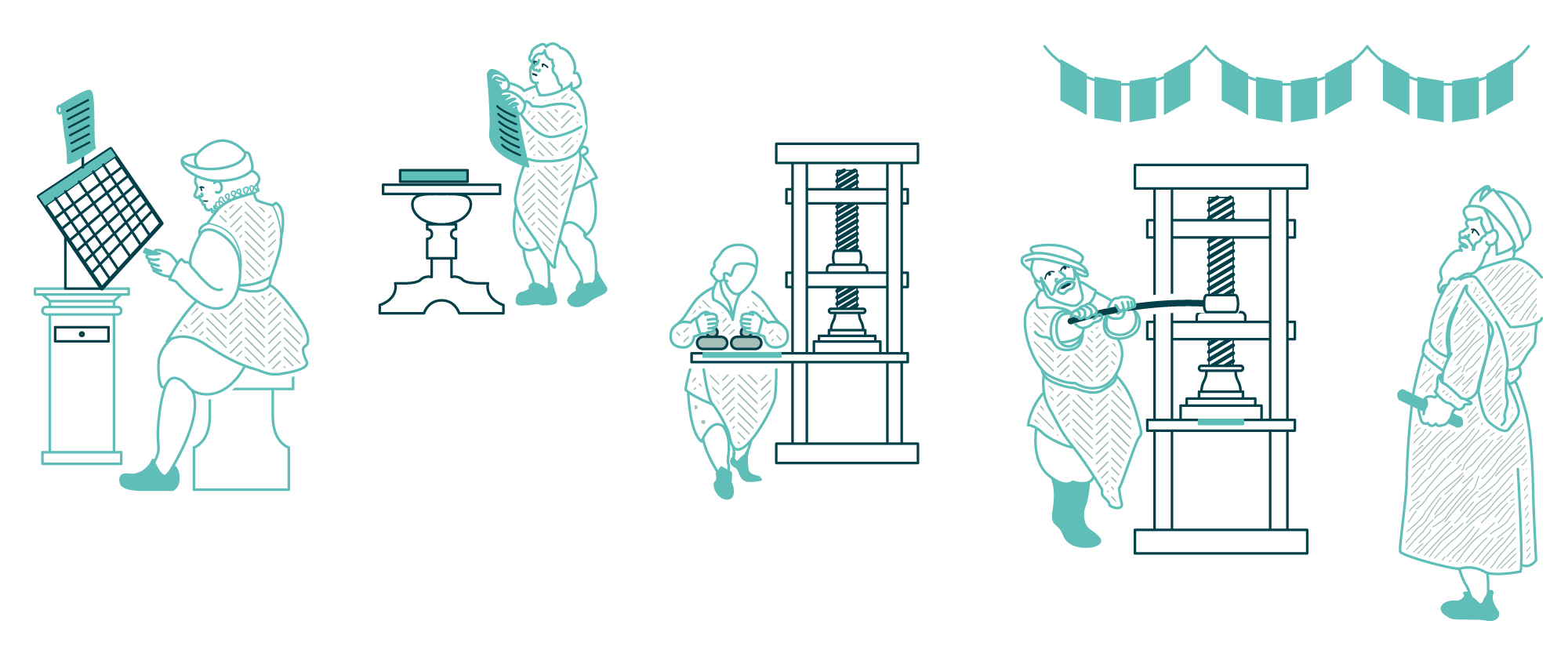
Founded in 1966, Laville grew in the world of high-end printing. A commitment to manufacturing excellence, attention to detail, mastery of creative papers, and a taste for fine finishes have durably shaped the company's identity.
This history has passed down a conviction that remains at the heart of our work: in graphic arts, touch is an aesthetic dimension in its own right. Paper, reliefs, textures, and manufacturing choices fully contribute to how content is perceived, understood, and shared.

2002
The birth of a second profession
In the early 2000s, the company opened a new chapter with braille publishing and then tactile graphic design. Initially developed alongside our high-end printing business, this expertise grew over the years through contact with museums, associations, institutions, and visually impaired audiences.
The company innovates, experiments, and develops its own design methods: dual-writing, dual-graphics, high-relief, multisensory tools, and new braille and tactile printing techniques. Through these innovations, this activity has gradually forged a unique identity, a distinct corporate culture, and its own methods and differentiating approach to tactile accessibility for text, images, and culture.
2026
Laville Braille & Tactile
In 2026, this evolution became the core of our identity. Laville Braille & Tactile is no longer just a design and printing studio: the company has become a graphic studio dedicated to tactile accessibility.
Our team brings together expertise in graphic design, braille transcription, cultural mediation, art history, manufacturing, and printing, all united by a single conviction: to make works and knowledge accessible and to share their richness.
We design tools where braille, touch, and accessible graphic design become new languages of mediation, capable of opening new paths to accessing works, images, and knowledge.
Our clients trust us