
Braille Printing & Publishing
We design, transcribe, and print braille documents, as well as dual-script and bi-graphic materials for businesses, government agencies, educational institutions, associations, and cultural venues.
Braille business cards, professional documents, tactile and braille navigation aids, educational materials, and specialized publications: we manage the entire graphic production chain from design to manufacturing.
Braille remains the only script that can be read directly by touch. Used in education, professional life, navigation, and access to culture, it is an essential tool for reading for blind individuals.
Depending on the requirements, a project can combine braille, large print, tactile images, and digital content if available (for example, via a tactile QR code). Dual-script writing allows blind, visually impaired, and sighted people to use the same document. Tactile bi-graphic images complement the text when information is conveyed through a map, diagram, artwork, or illustration.
At Laville Braille & Tactile, we identify the most relevant solution for each project and handle production in-house. Our team brings together expertise in braille transcription, graphic design, cultural accessibility, and manufacturing. This mastery allows us to design materials that meet both the needs of visually impaired visitors and the mediation goals of every project.







YOUR NEEDS
Communication
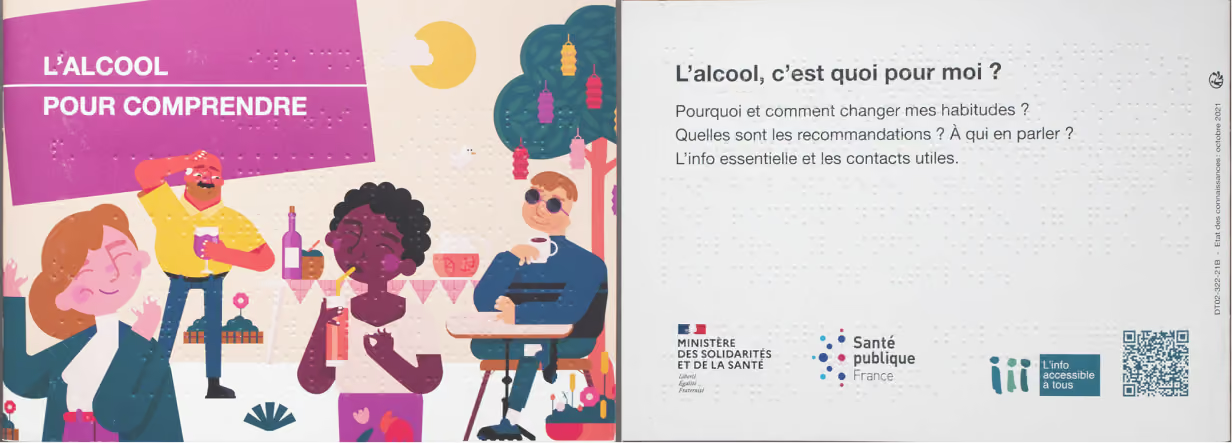
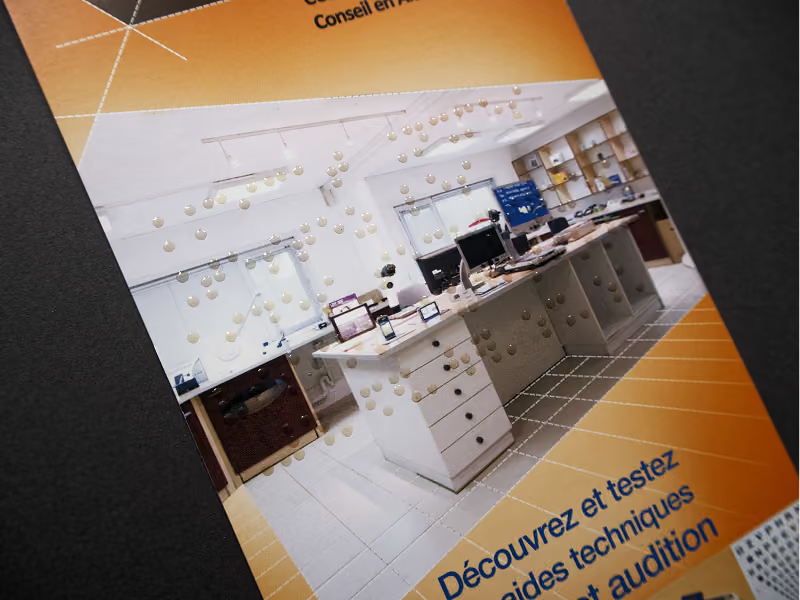
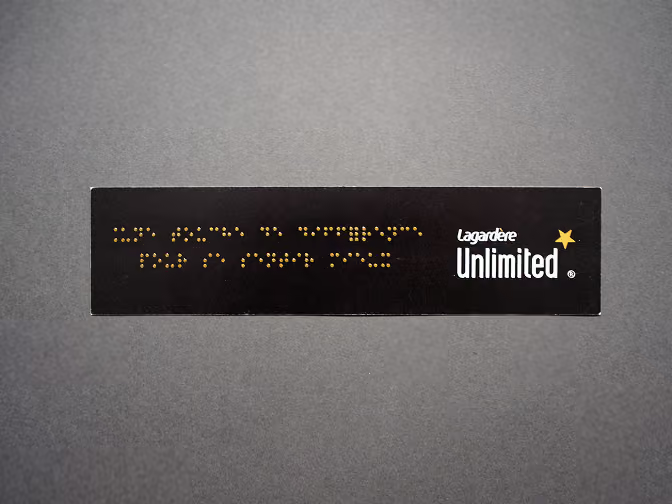
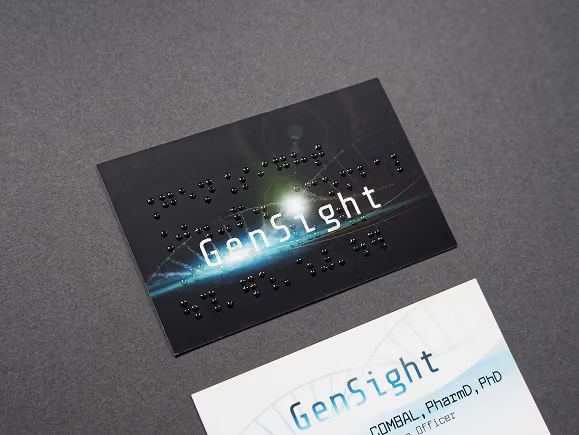
Braille business cards, braille stationery, braille flyers, braille brochures, leaflets, tactile labels, information materials, and more…
Braille provides access to content. It also makes accessibility visible.
Learning and working
Patient guides, educational materials, exam papers, professional documents, workplace procedures, information documents for the public and users, etc.
Some projects require in-depth reflection on usage, content, reading paths, and technical choices in order to produce a document that is useful for daily life and adapted to its context.
Accessing culture
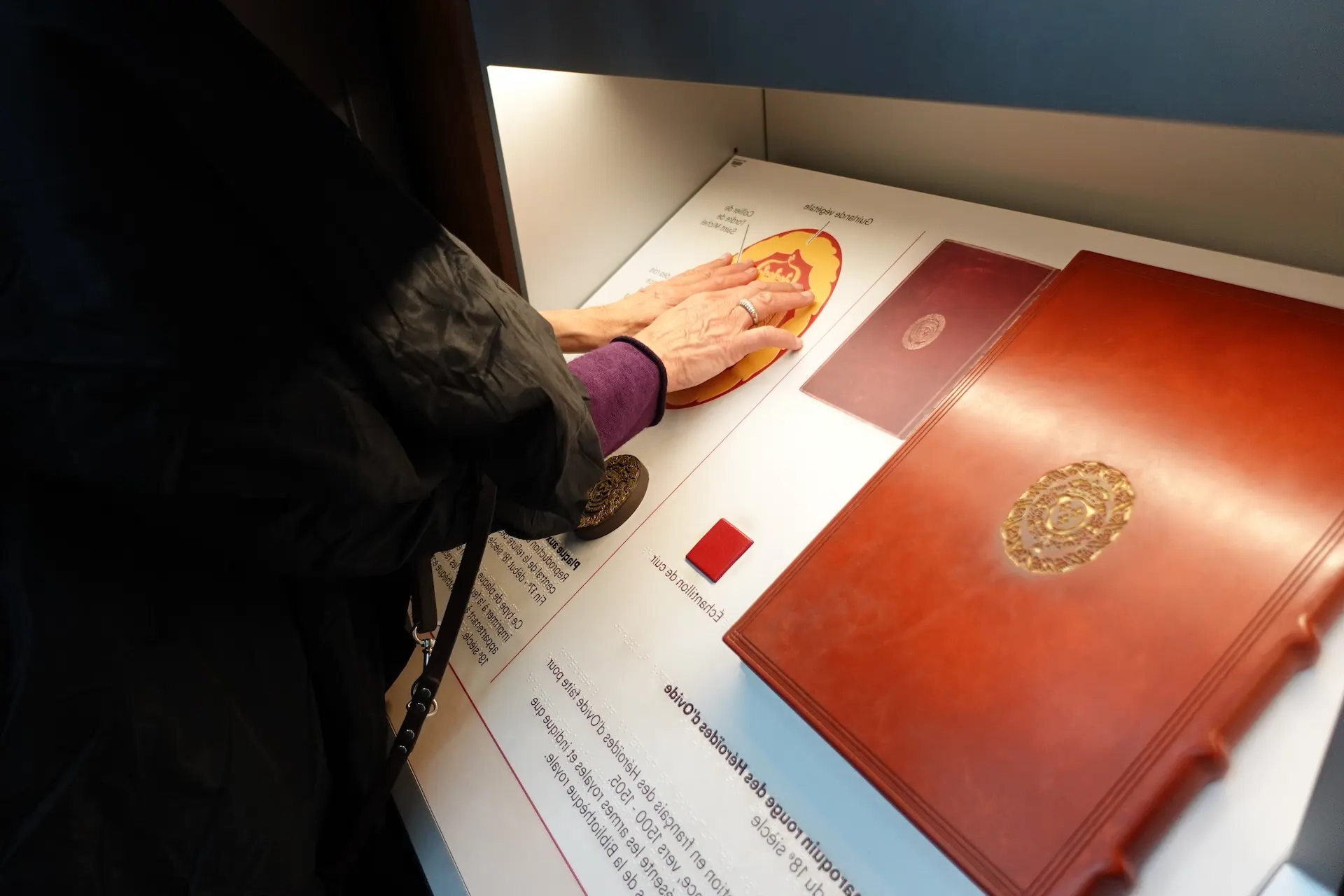
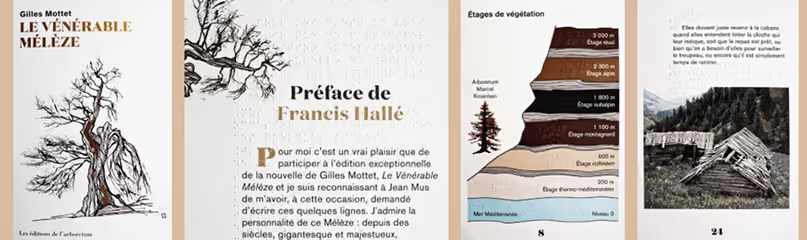
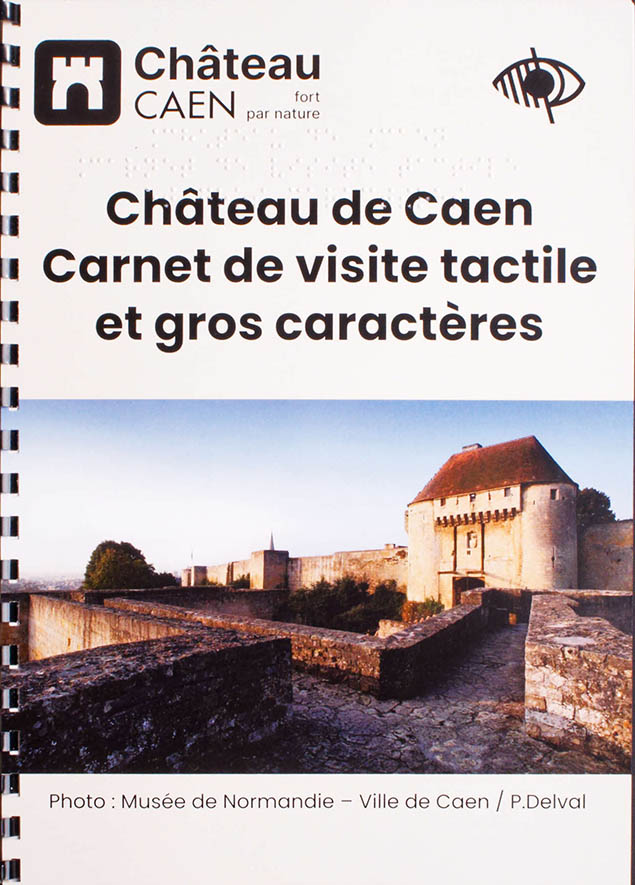
We design and manufacture braille and dual-script materials for museums and cultural venues. Our expertise also allows us to support publishing houses and authors in creating adapted tactile-visual books.
Exhibition texts, welcome booklets, technical labels, expanded labels with descriptions, visitor guides, accompanying documents, tactile maps: we adapt the content and the medium to the usage, reading constraints, and the venue's mediation goals.
To discover our tactile graphic design projects:
Navigating
Adapted welcome guides and booklets, navigation systems, tactile information and wayfinding materials, dual-script tactile maps, etc.
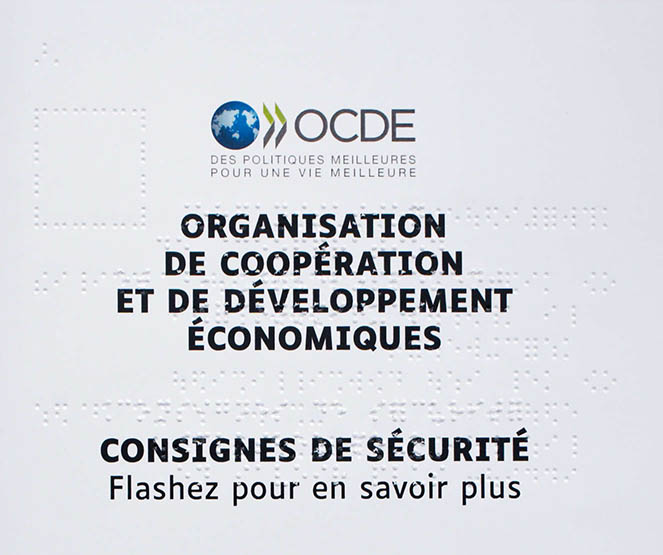
We design and produce braille and tactile solutions that facilitate navigation for visually impaired people in public buildings.
Accessible signage doesn't start with braille, but with the ability to locate it. That is why we think of the accessible experience as a coherent journey—reception, navigation, access to information—to ensure true autonomy for visually impaired individuals.

Braille in the digital age
Smartphones and digital technologies have profoundly transformed access to information for visually impaired people. Yet, far from being replaced, braille continues to play an essential role in accessing written text for many blind readers.
More than two centuries after its invention by Louis Braille, this writing system remains so vibrant that France and Germany have jointly submitted its candidacy for inscription on UNESCO's Representative List of the Intangible Cultural Heritage of Humanity. Laville Braille & Tactile is committed to supporting the associations behind this project. Accessibility doesn't start at the printing stage, but at the very beginning of a project's design.
Far from being opposites, braille and digital technology serve complementary purposes. While audio allows for listening and quick access to large volumes of information, braille allows for reading, rereading, annotating, checking the spelling of a word, consulting a table, taking notes, or browsing a document at one's own pace.
This is why it is widely used in education, professional life, navigation, and information access for blind individuals. It remains a major tool for inclusion and integration in school, university, and professional life today.
Depending on the project, it is often relevant to combine several modes of accessing information. A single medium can combine braille, large print, tactile images, and digital content accessible via QR codes to meet different needs and user profiles.
Techniques tailored to every project
A braille business card, a visitor guide, a professional document, a tactile map, or a cultural mediation tool all serve different purposes and require different design or manufacturing choices.
Depending on the requirements, we define the materials, manufacturing techniques, and design principles best suited to the project in order to meet the real needs of users, the context of use, and the project's constraints.
Accessibility doesn't start at the printing stage, but at the very beginning of a project's design.
Who will use the document? In what context? For how long will it be used? Will it need to be shared between blind, visually impaired, and sighted individuals? Does the content need to be read quickly, kept, annotated, or consulted regularly? These questions directly influence design and production choices.
Sometimes a simple transcription is enough. In other cases, it isn't enough to produce a truly usable document. Braille generally takes up five times more space than standard print. Depending on the intended use, it may be necessary to reorganize information, simplify certain content, or add tactile markers, tactile images, or large print.
A relevant solution is not necessarily the most technical or the most comprehensive one. It is the one that best meets the real needs of users while respecting the project's constraints.
This thought process then guides the choice of materials, manufacturing techniques, and printing methods we implement. Paper, sustainable materials, braille-only, dual-script, tactile images, or mass production: every project calls for different responses.
Our techniques and materials
Paper
Smartphones and digital technologies have profoundly transformed access to information for visually impaired people. Yet, far from being replaced, braille continues to play an essential role in accessing written content for many blind readers.
Durable materials
PVC, Dibond, vinyl adhesives, wood, plexiglass, polypropylene, or synthetic papers: we select materials based on the usage, durability, and handling requirements specific to each project. These allow us to create tactile devices designed for intensive use in museums, cultural venues, and public establishments. When project constraints allow, we prioritize materials with a low environmental impact.
Discover an example of tactile projects for a museum


Braille and bi-script printing?
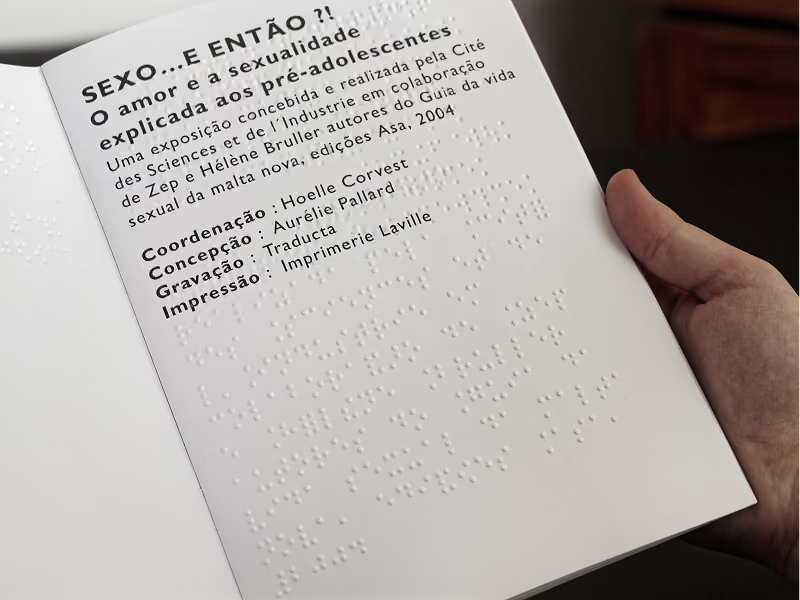
Rather than producing separate documents for different audiences, it can be effective to create bi-script documents, which involve superimposing large-print text and its braille transcription on the same medium. Bi-script printing allows visually impaired non-braille readers, braille readers, and sighted individuals to access and share the same information.
Depending on the project, we can incorporate color printing, tactile images, and other graphic elements to design materials adapted for multiple reading modes.
To discover bi-script printing:
Braille printing techniques
Depending on the usage, quantities, materials, and context, we use various braille production techniques.
Thermorelief, a technique developed in-house, allows for the production of small to medium-run documents on pre-printed materials. This is our preferred technique for cards, invitations, greeting cards, and more. Embossing forms braille dots directly into the paper and remains the standard technique for many documents with substantial textual content. Resin, meanwhile, offers particularly robust and durable relief on hard surfaces. This technique is best suited for signage and materials that are handled frequently or used in demanding environments.
Each technique has its advantages. Our role is to choose the solution best suited to the document's actual use, its environment, and the needs of its users.
Our clients