
OUR TACTILE EXPERTISE
A tactile image is more than just an image in relief.
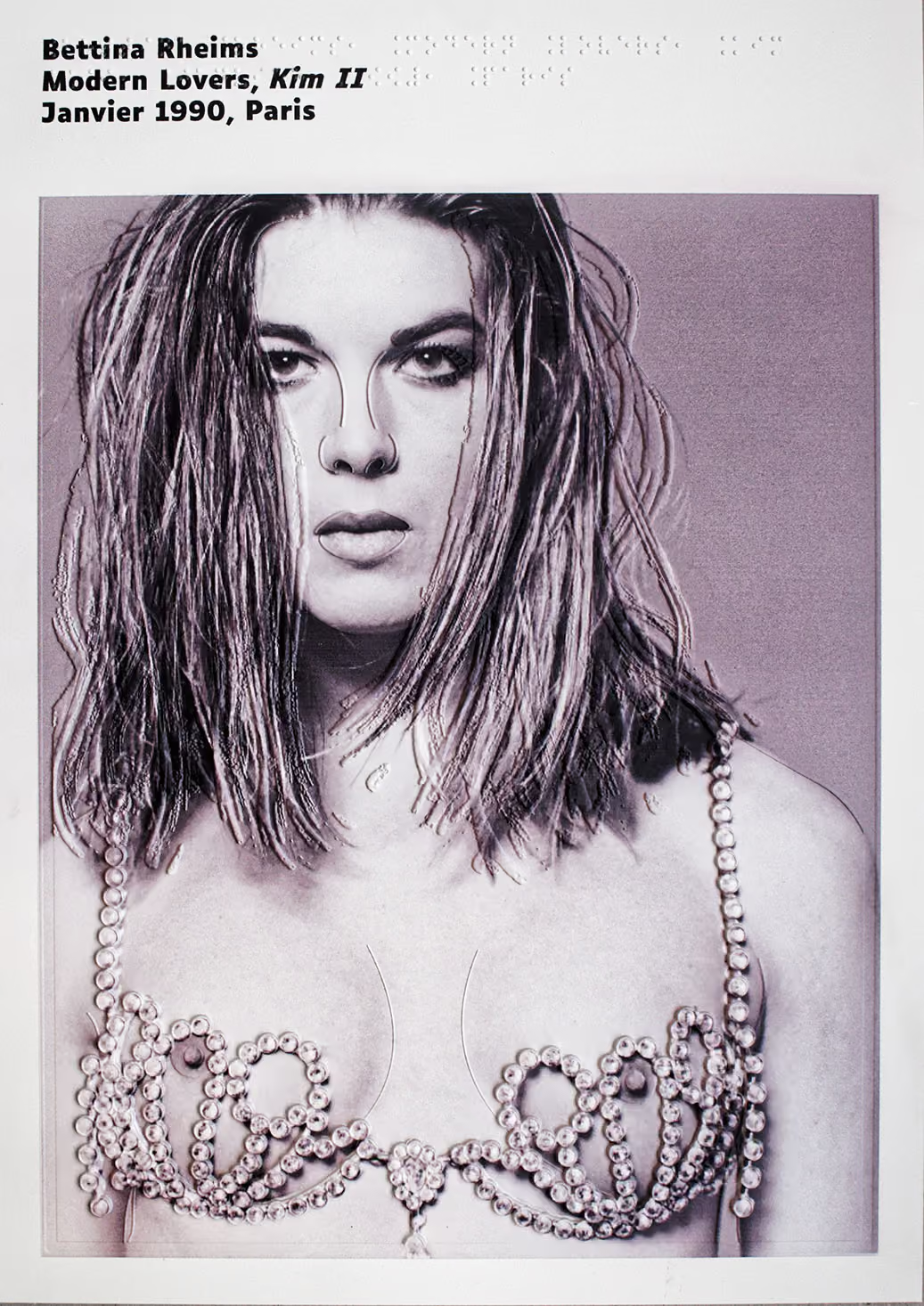
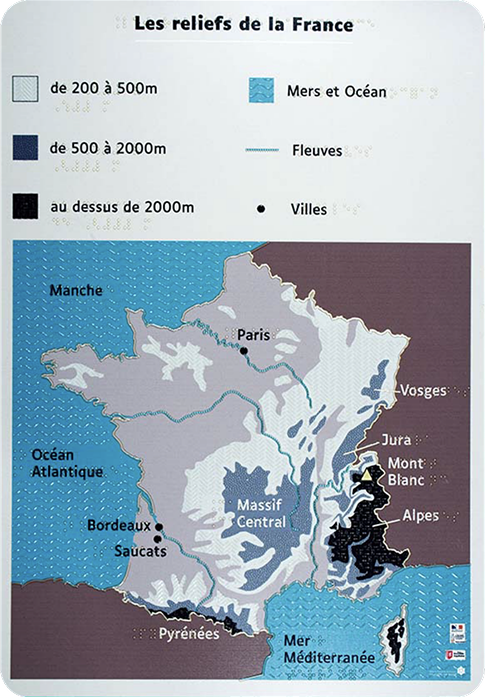
It requires genuine graphic interpretation work so that touch becomes a tool for discovering and understanding works, places, images, and knowledge. It is not about reproducing every detail of a visual, but rather offering a graphic interpretation that allows for clear, progressive reading adapted to touch.
We design and manufacture tactile images, floor plans, booklets, dual-format tables, and mediation tools that put tactile drawing at the service of cultural discovery. Designed primarily for visually impaired audiences, they also benefit people with disabilities and, more broadly, all visitors.
Interpreting a tactile image
Tactile design relies on demanding graphic interpretation work.
Based on the visuals provided, we identify the essential elements of the image to organize the information for clear tactile reading. Each adaptation requires prioritizing shapes, simplifying certain details, and finding a balance between tactile legibility, graphic richness, and fidelity to the original content.
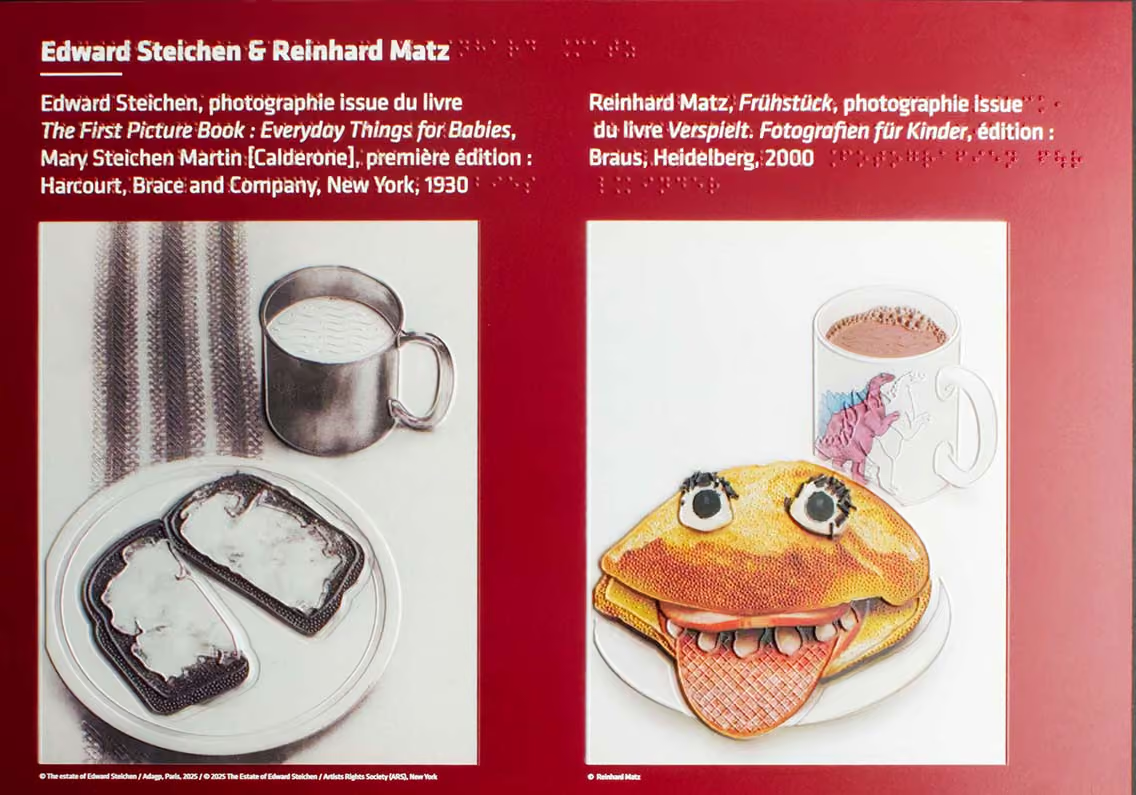
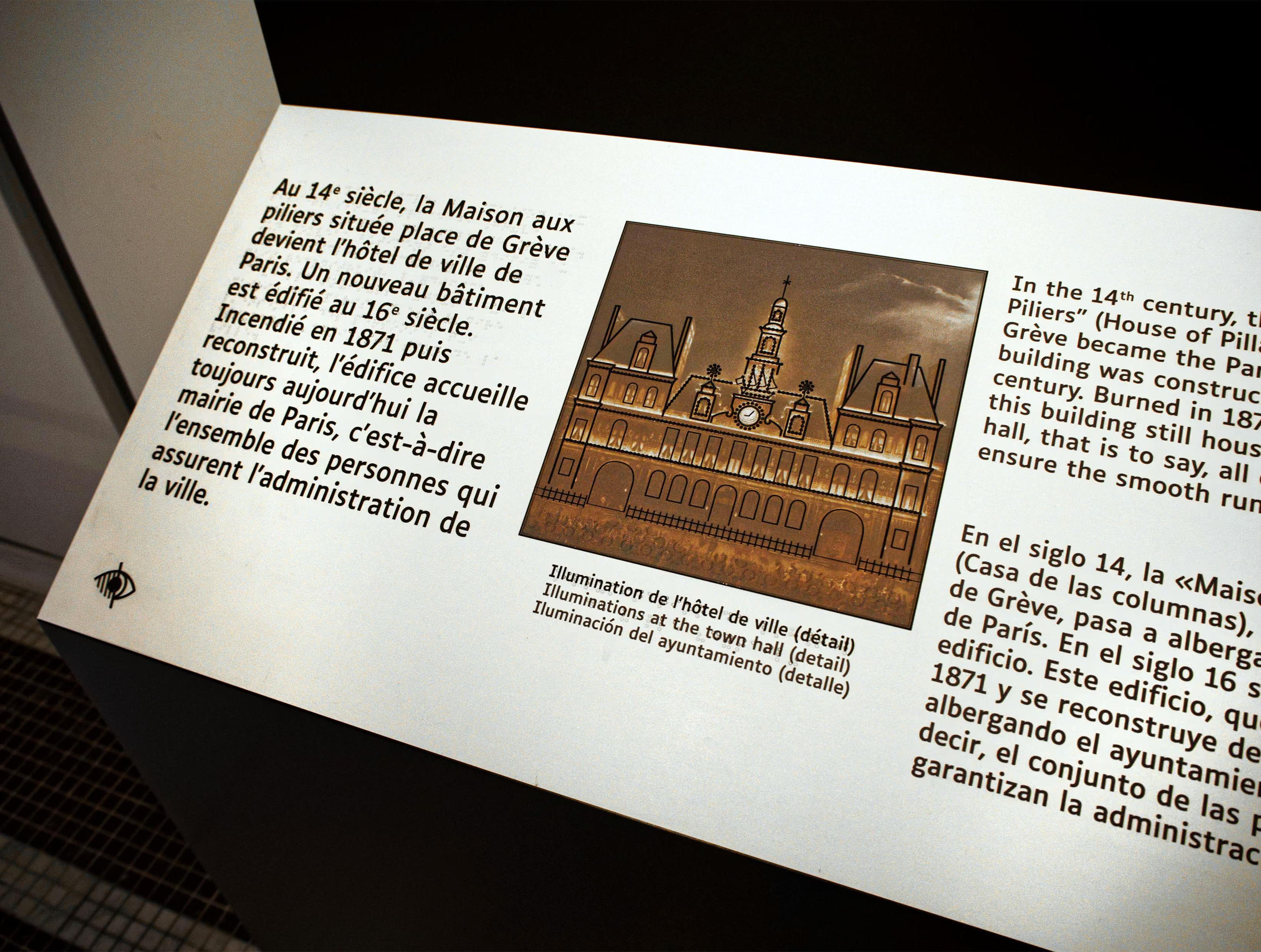
Each image is then designed as a tactile reading path. Dimensions, lines, contrasts, textures, and relief levels are crafted to pace the discovery and gradually support the understanding of the image. This formatting allows for the creation of materials that are comfortable to handle, consistent in their reading, and adapted to mediation situations.
Turning reading into dialogue
The more complex the tactile image, the more demanding the reading process can be.
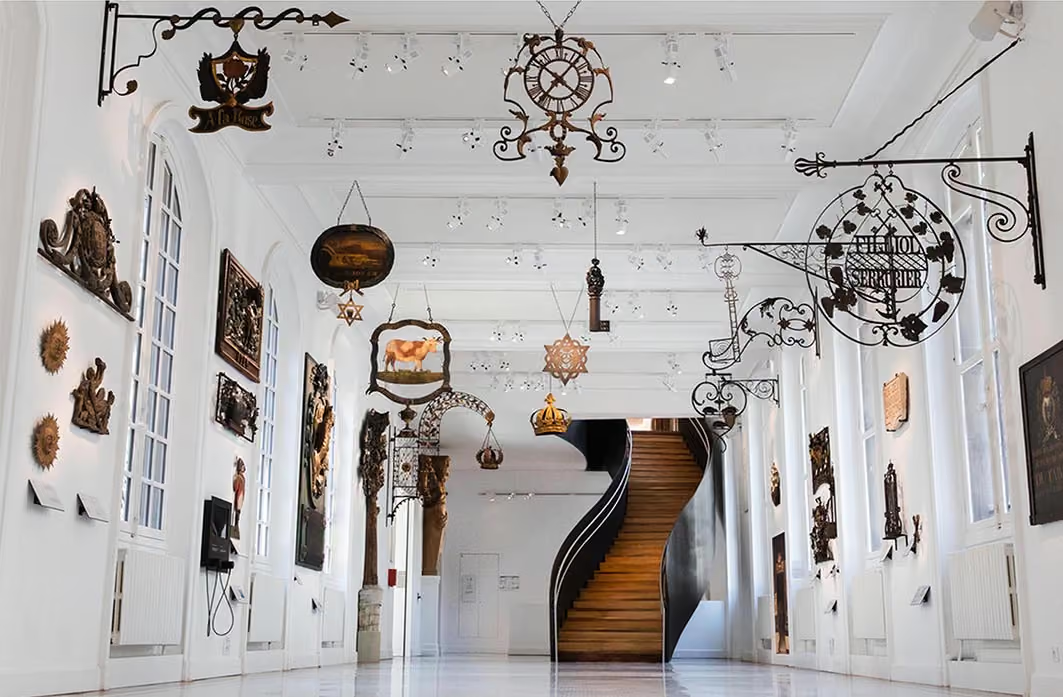
The concentration required to understand a relief image, as well as to memorize its various elements, can make the exercise tiring for readers. Visitors must therefore feel comfortable: dedicated paths, areas protected from crowds, adapted reception conditions, or training staff to assist visually impaired visitors can all enhance the quality of the experience.
From tactile image to mediation tool
Depending on the project's objectives, a tactile image can be designed in different ways
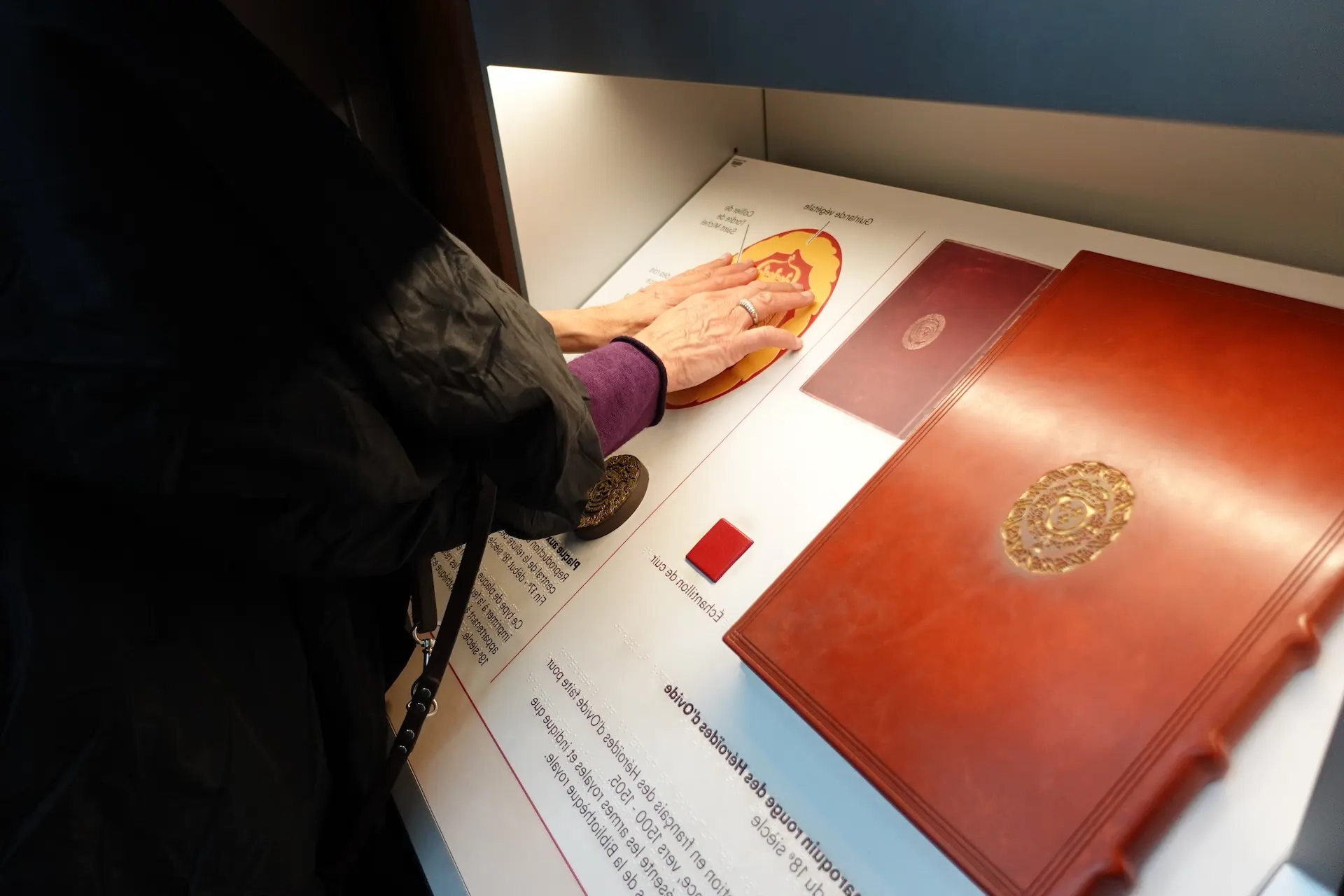
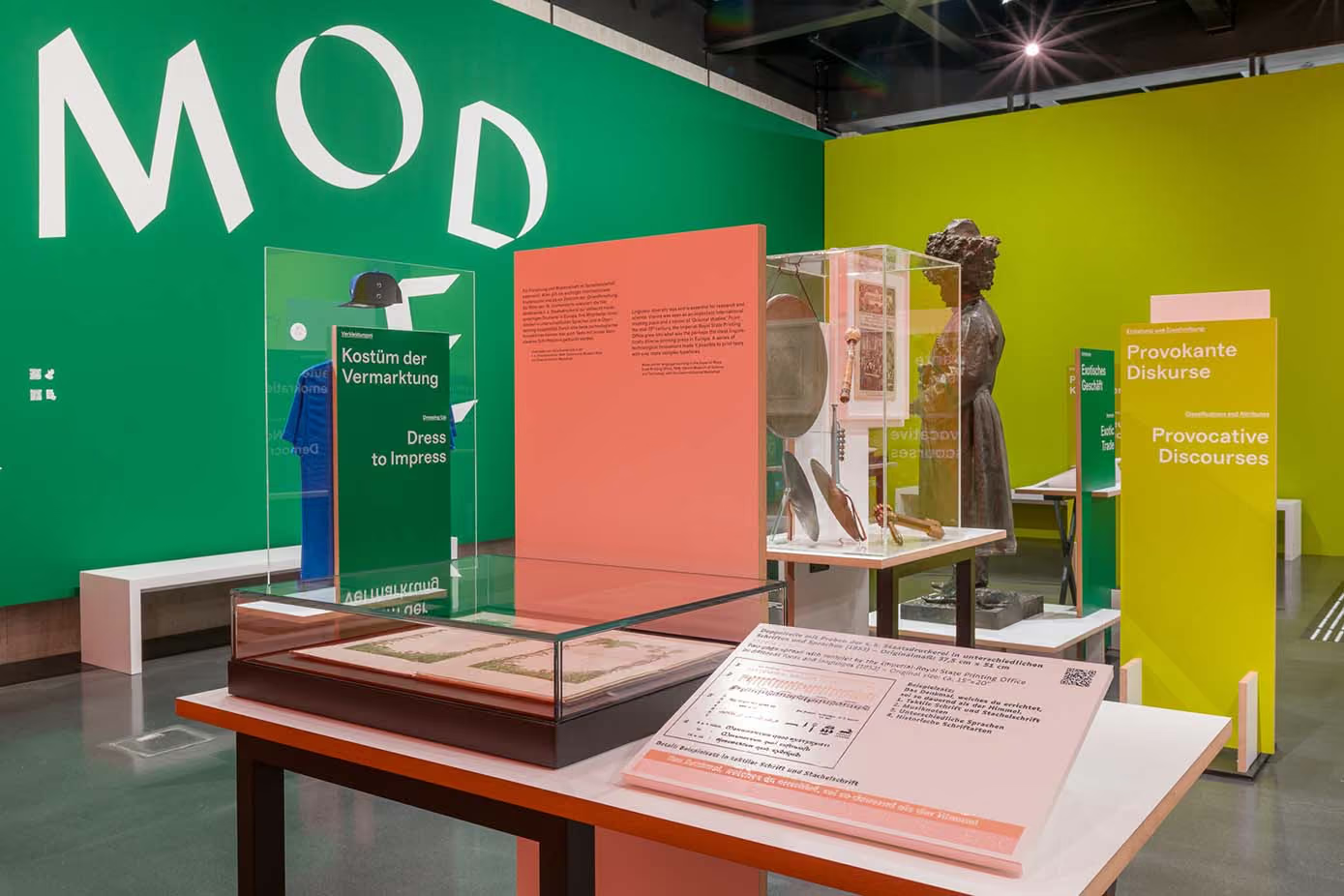
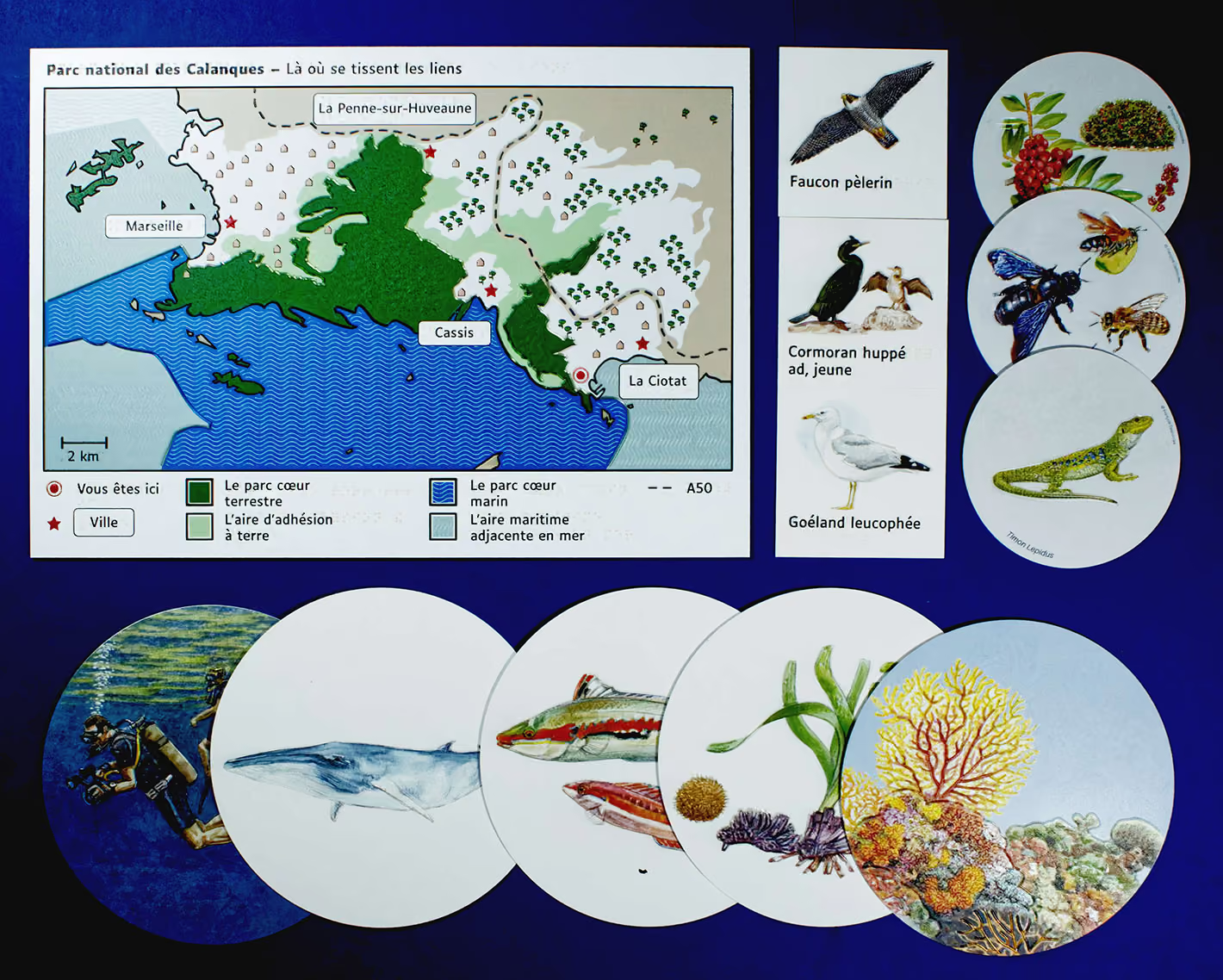
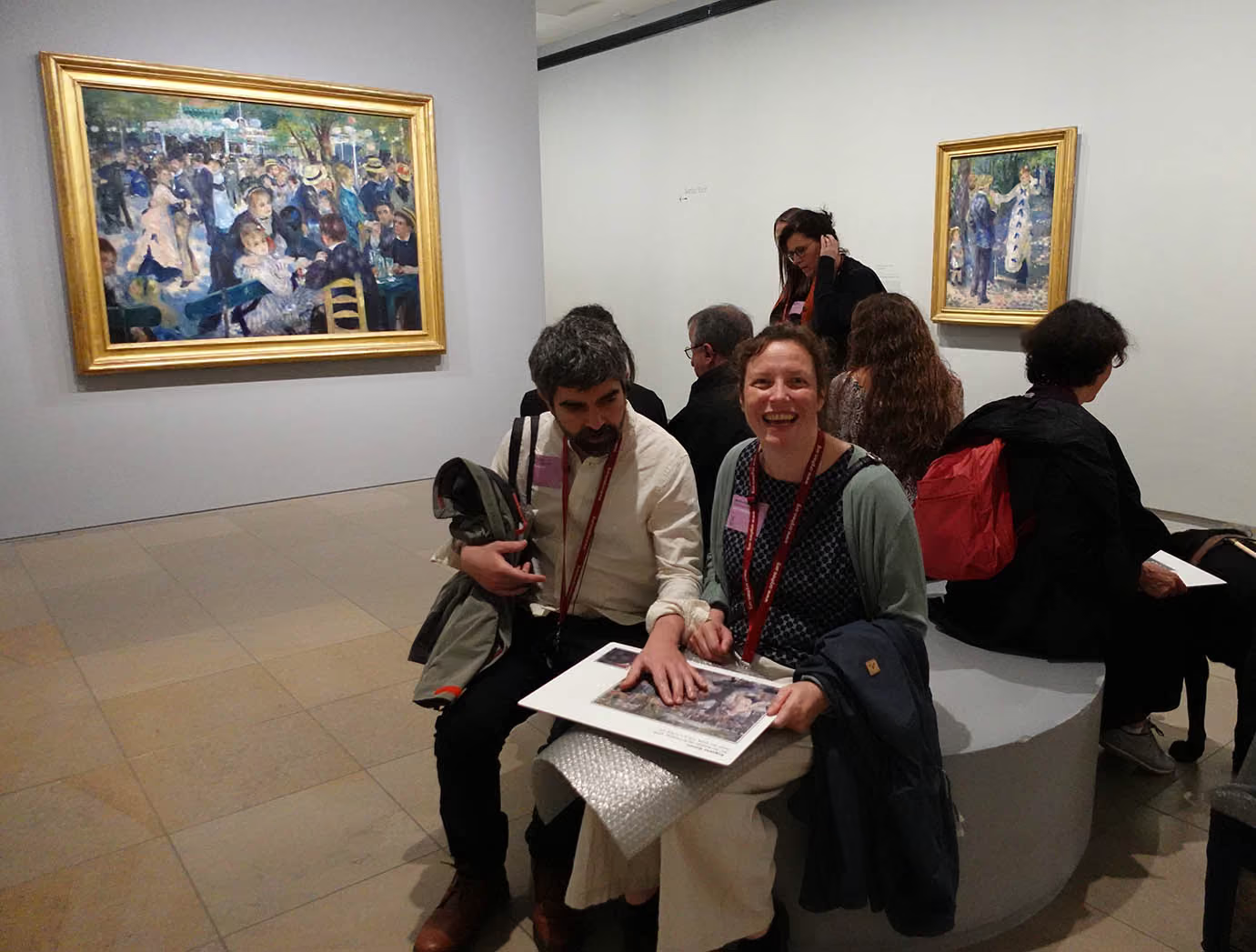
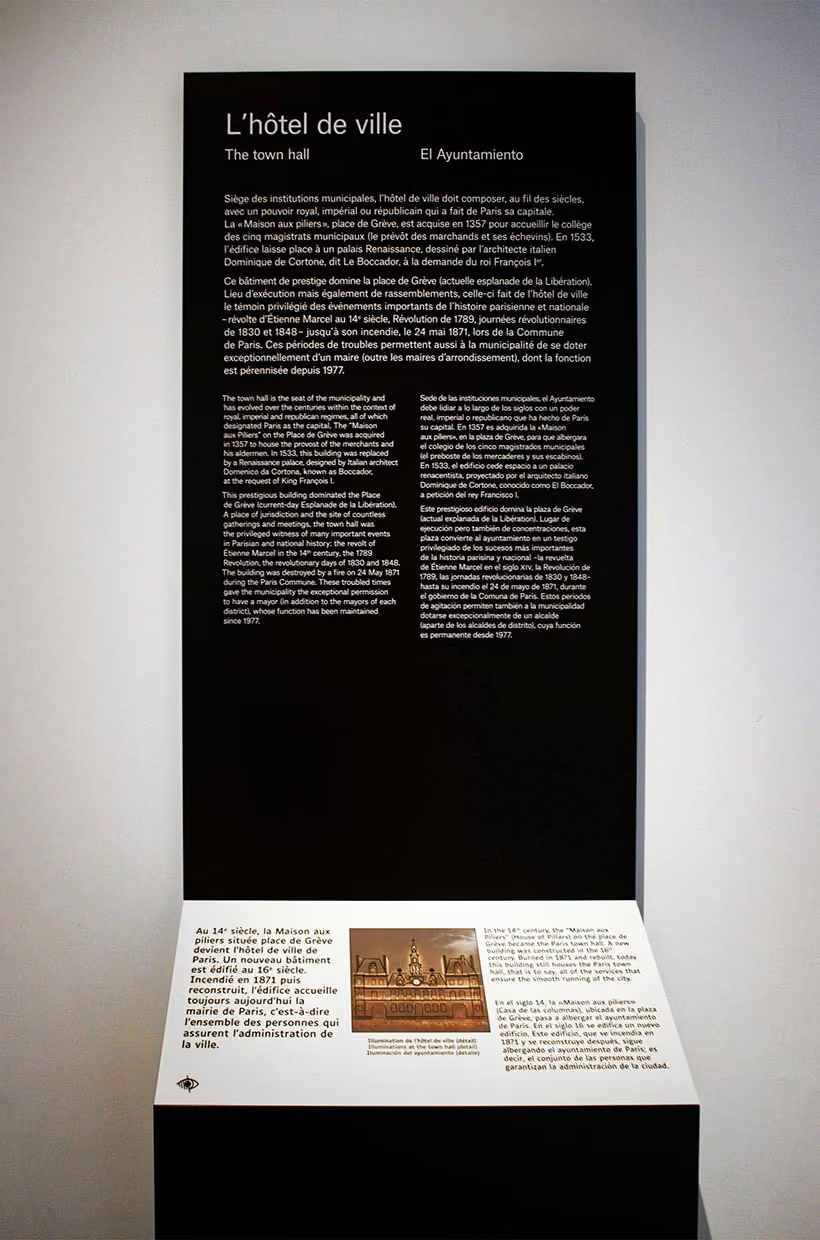
and integrating them into various mediation tools. Some images are created in dual-format to be read both by sight and by touch. Others use multiple levels of relief to facilitate the reading of complex works, making their composition, volumes, or specific details more perceptible. They can then be integrated into a tactile board combining images, dual-format captions, enlarged details, or textual content, or be part of an even more comprehensive mediation setup mixing images, 3D, material samples, tactile QR codes, and other sensory supports.
These tools engage different visitor profiles and can be used as mediation aids, even outside of accessible tours. They create a dialogue that allows mediators to adapt their narrative to what the public perceives and understands of the work, thereby improving the overall visitor experience.
Making projects accessible
There is no universal method for designing a tactile image.
Each project responds to a specific context, precise cultural and educational objectives, and the needs of its visitors. Our work involves finding the most appropriate graphic solution for each situation, taking into account the role of the tool within the mediation project, its dialogue with other mediation resources, and the constraints specific to each location.
At Laville Braille & Tactile, this solution is built collectively by a team of graphic designers, braille transcribers, cultural professionals, manufacturers, and printers. Because design and production are brought together in the same workshop, we can experiment, adjust, and refine each tool until we find the most relevant solution.
Over twenty years of collaboration with mediation teams, associations, and the public fuel this approach, with a single standard: making works accessible without compromising their cultural and graphic richness.







Our partners

















Cultural Mediation Projects
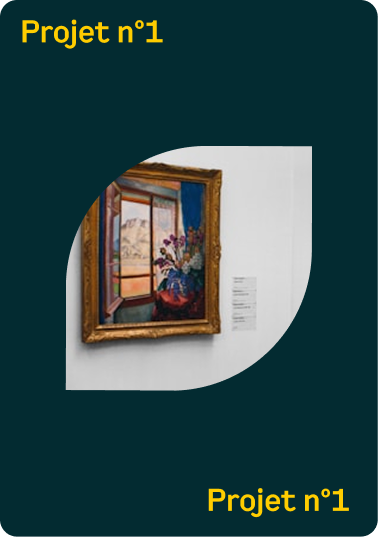
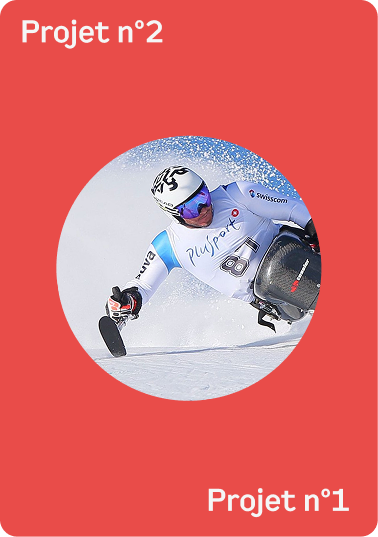


Every tactile mediation project leads us to rethink how an artwork, a space, an image, or a piece of content can be discovered, understood, and shared in a new way.
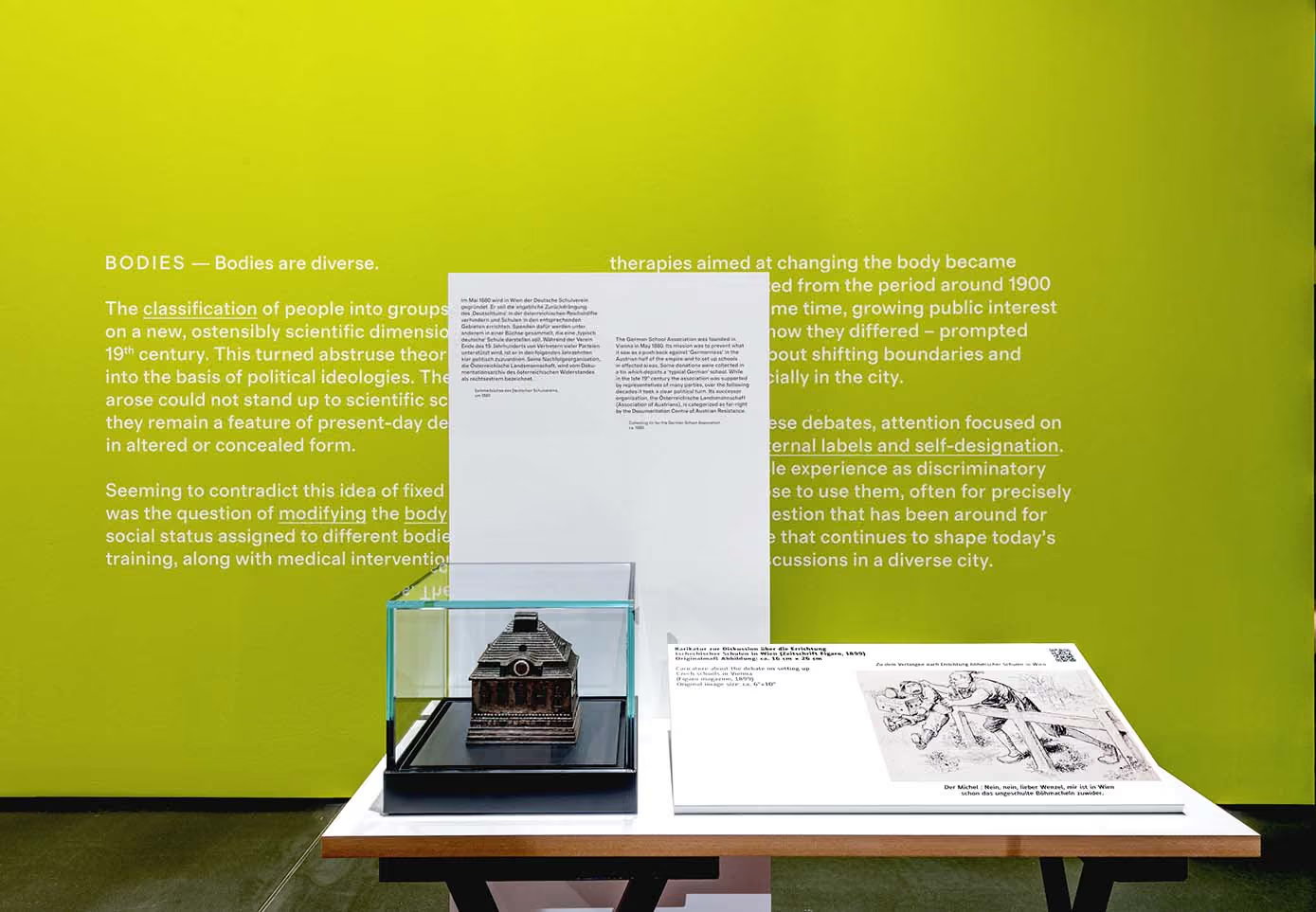
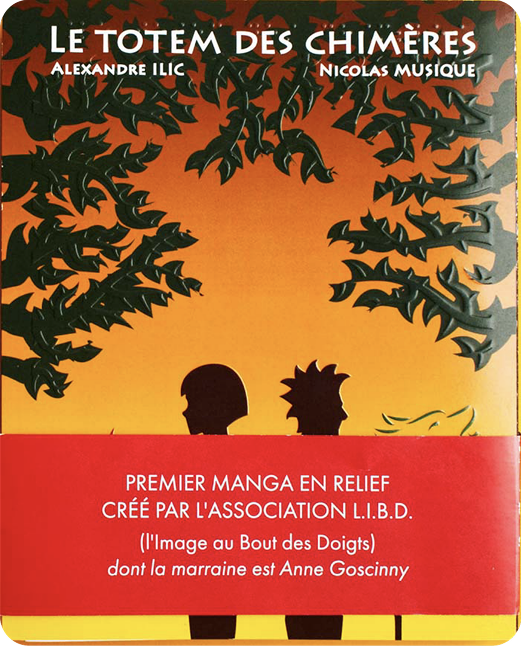
Whether it's relief maps, graphic books, visitor guides, educational tools, tactile displays, scientific mediation, nature trail maps, or tactile reproductions of artworks, our projects take on many different forms depending on the museum, the target audience, and how mediation is integrated into the space. For every context, we aim to design solutions where touch, graphic design, and mediation work together to support the discovery and understanding of artworks and content.
This approach is rooted in a strong conviction: by designing mediation specifically for visually impaired audiences—those who cannot directly see the original work—we create the most comprehensive, clear, and structured tools, which in turn foster the best dialogue between all visitors. A tactile image, booklet, or display designed for non-visual reading forces us to clarify our intentions, organize information, and make the experience more intuitive and engaging. Ultimately, this benefits all visitors.
The projects presented here showcase different ways of approaching this research. Each one was born from a dialogue with a specific site, artwork, team, or need. We view them as spaces for experimentation, mediation, and creation, built in collaboration with the institutions and partners who trust us.
Our partners
Make your exhibitions accessible to everyone.
Lorem ipsum dolor sit amet consectetur. Feugiat ultricies semper elit mi fusce eu enim pulvinar risus. Nullam dolor mauris quis faucibus. Morbi sit tincidunt.